As I reflect on my recent trip to California to attend the Stand Up To Cancer Scientific (SU2C) Summit, it is a frigid 2°F outside here in Massachusetts. The contrast with Pasadena’s warm sunshine is striking. Yet what remains most memorable is not the weather, but the warmth inside the summit itself. The energy and shared purpose among attendees were palpable, reflecting a collective commitment to advancing science, sharing data, and celebrating meaningful progress. When the goal is ultimately to save lives, collaboration carries a different weight.
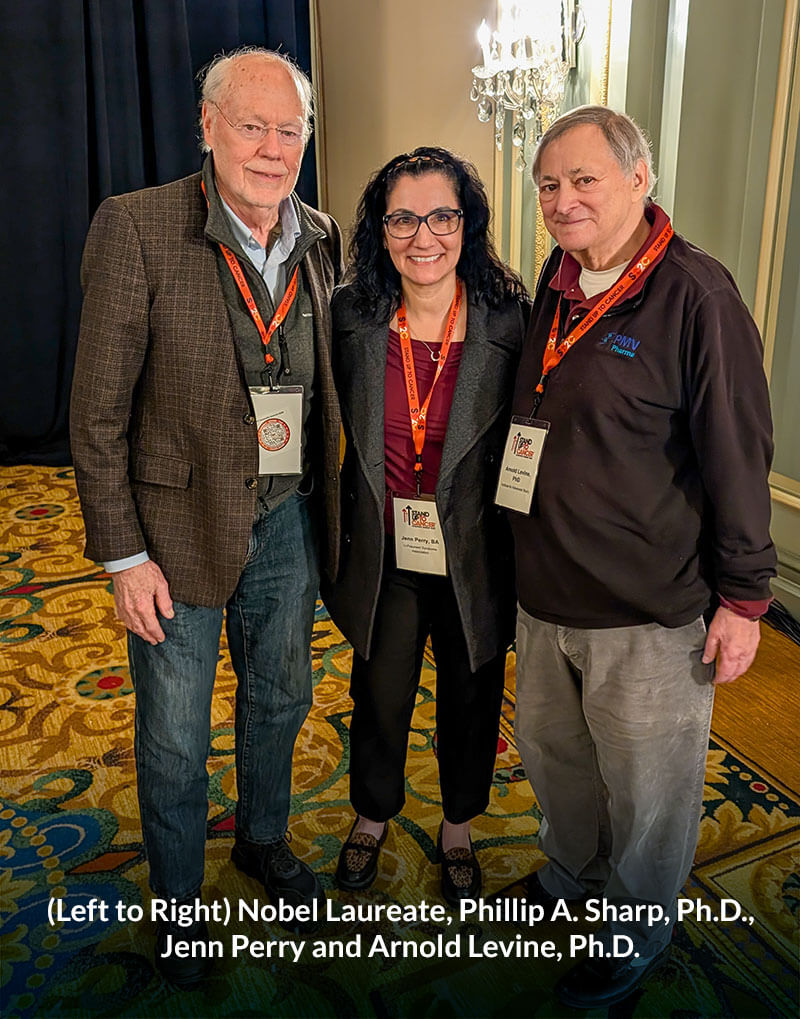
Immersed in this world of science, I was reminded how much there is to learn and how essential it is to stay engaged. I had the privilege of sitting among leaders in the field, including Nobel Prize winner Phillip Sharp. Representing the Li-Fraumeni Syndrome Association (LFSA), I am continually mindful of the responsibility to understand and elevate the voice of the LFS community. As an advocacy organization, our role is to listen, to learn, and to work alongside researchers, clinicians, and industry partners to help advance thoughtful, patient-centered solutions. Even incremental progress matters deeply to families living with a rare syndrome that predisposes them to multiple unrelated cancers throughout their lifetime. Opportunities to contribute to meaningful dialogue and collaboration are not only valuable – they are necessary.
Advocacy, at its core, is the act of using experience and influence to create change, particularly for communities that may otherwise go unheard. It serves as a bridge between lived patient experience and actionable solutions. At its best, advocacy is not about speaking for patients, but partnering with them and aligning researchers, clinicians, policymakers, industry leaders, and community organizations around a shared goal: improving outcomes and quality of life.
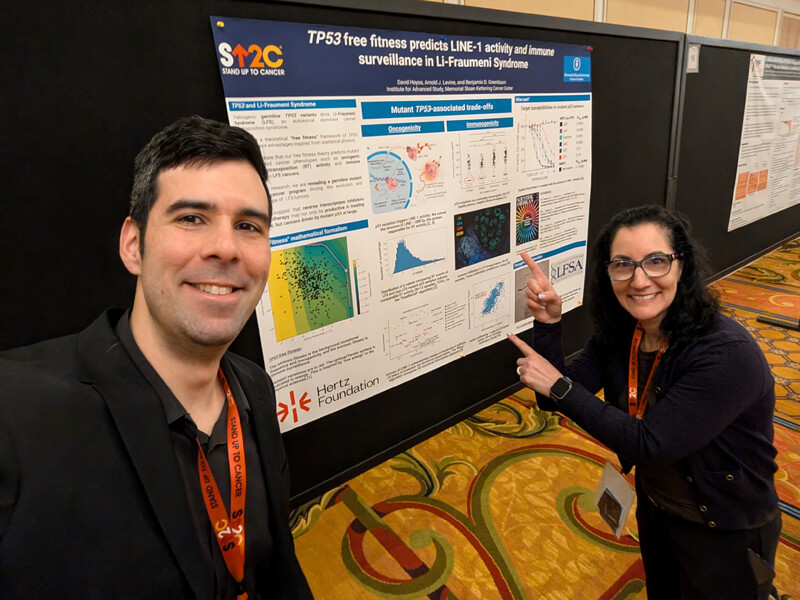
David Hoyos and Jenn Perry
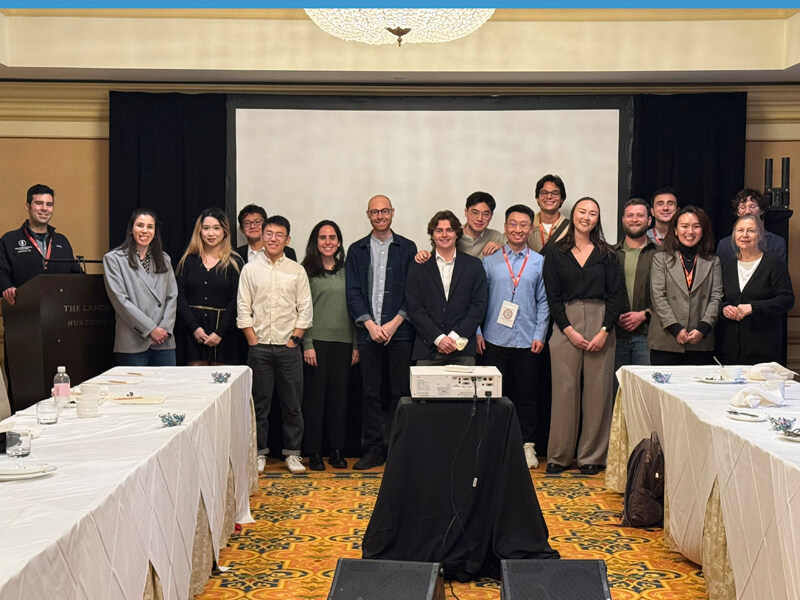
Hertz Foundation Fellows

Francesmary Modugno, Ph.D., and Jenn Perry
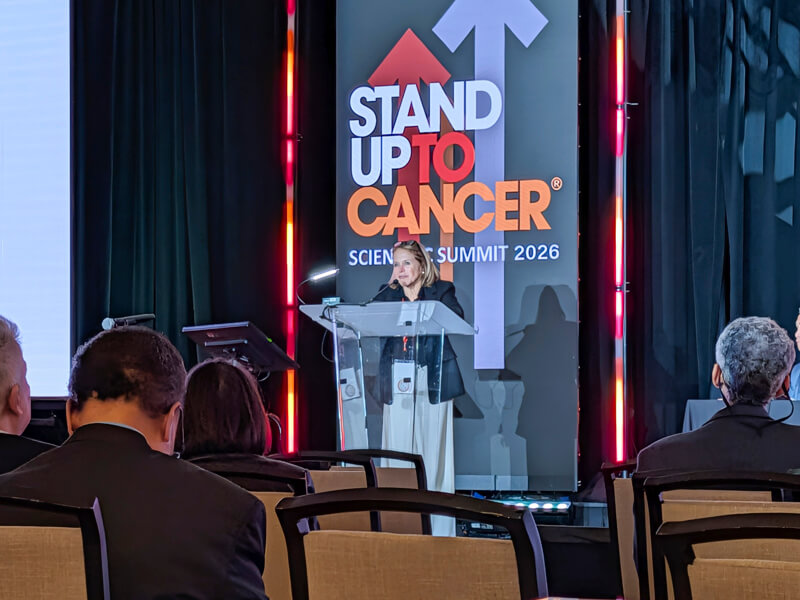
Katie Courics speaking at the SU2C Scientific Summit
Progress accelerates when silos are replaced by partnerships, when data meets lived experience, and urgency meets expertise. When each stakeholder understands their role, solutions become not only faster, but more relevant, equitable, and sustainable. Research, clinical innovation, policy change and access to care all move forward together.
LFSA is fortunate to work alongside dedicated board members, advisors, and global leaders who generously contribute their expertise to this mission. Professor Arnie Levine, Co-Chair of our Medical Scientific Advisory Board, exemplifies that commitment. Through his guidance, I was able to attend the SU2C Scientific Summit and a preceding meeting that highlighted emerging investigators at pivotal stages in their careers. Witnessing young scientists explore promising paths in cancer research was both energizing and reassuring. David Hoyos, a member of our Medical Scientific Advisory Board, presented work focused on LFS and research initiatives supported in part by our organization. It was inspiring to see that work shared within such a respected scientific forum.
Throughout the summit, I had the opportunity to connect with physicians, researchers, scientists, and industry representatives who share a commitment to accelerating cancer research. Conversations with SU2C CEO Julian Adams, Margaret Foti of the American Association for Cancer Research (AACR), and the organization’s co-founders reinforced the importance of collaboration. I left with new professional connections, deeper insight into the evolving research landscape, and a renewed appreciation for the pace at which science is advancing.
As we prepare for the 8th International LFS Association Symposium at MD Anderson Cancer Center in Houston, Texas, October 2–5 this year, I look forward to continuing these conversations and welcoming both scientific leaders and patient voices into the same space. I truly hope to see my new connections and friends at our symposium, so we can further engage in science, and hear the voices of the patients that will be in attendance. That is the magic of coming together – when our work and shared purpose have the power to change and save lives.
Jenn Perry
LFSA President, Co-Founder & LFS Patient